


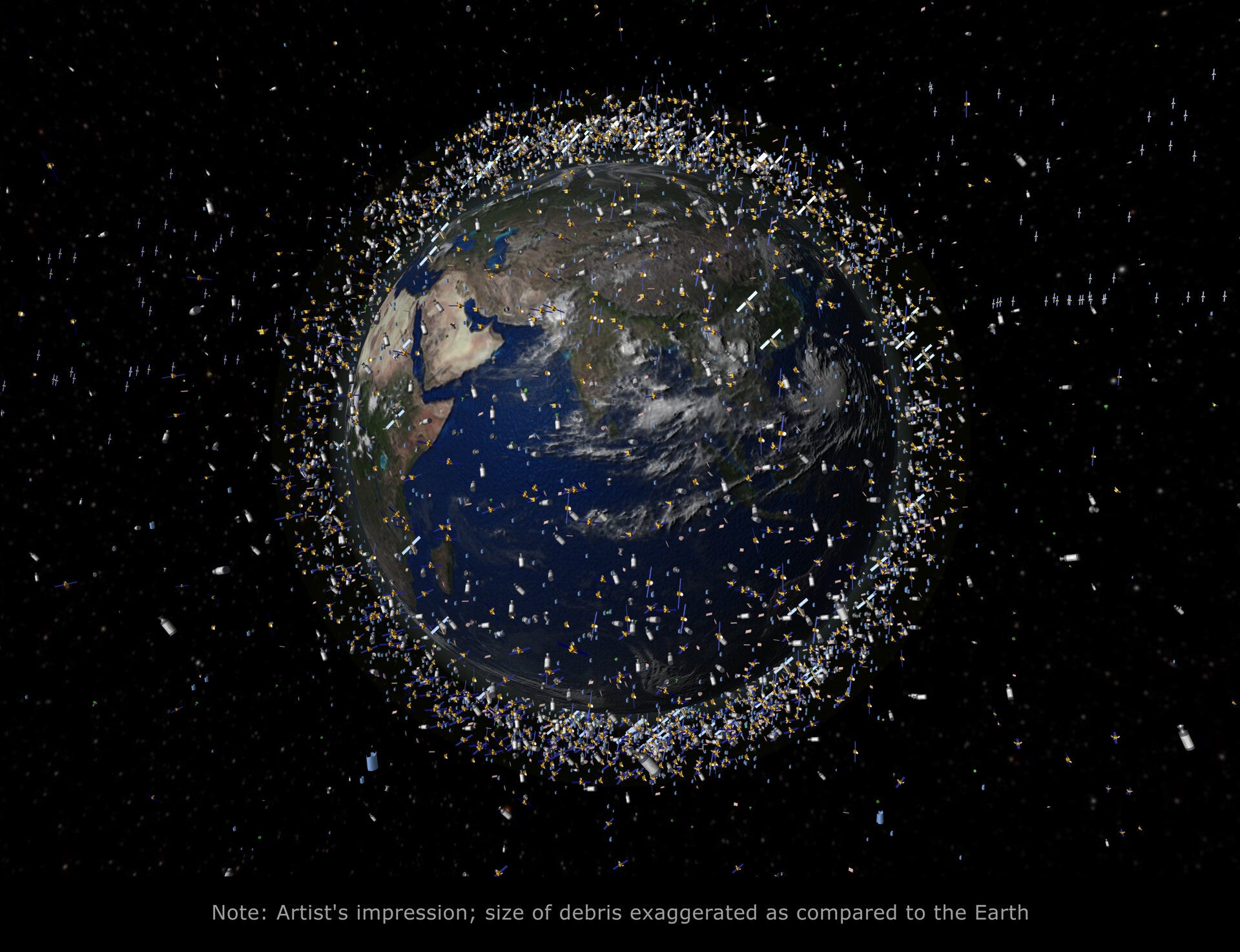
Roughly 17,000 active satellites are orbiting Earth right now, surrounded by several million pieces of space debris. The satellite count is growing exponentially, and that growth will only accelerate once Starship starts flying regularly. The obvious conclusion follows: more satellites mean more debris, so someone will have to clean it up. According to ESA, its orbital “health index” has worsened from about 4 to 50 in a single year. A value of 1 is considered sustainable. Anything above that means debris is piling up faster than it’s leaving orbit, and we’re now 50 times over that line. So who is going to clean this up, and can anyone make money doing it?
I’ve spent the last few years working on deorbiting at a startup, so this is a view from the inside.
Beyond deorbiting, I write about the wider space economy on LinkedIn: deals, market shifts, and what we’re working on at Space Ambition. If any of this is your field, please contact me on LinkedIn here (or marat@spaceambition.org).

Why Is This a Problem?
To begin with, not everything falls out of orbit on its own. Up to about 400–500 km there is still enough atmosphere to slow a satellite down, so it gradually loses altitude until it burns up. The ISS flies at 400 km, and without regular reboosts it would come down within a year or two. But the higher you go, the thinner the air and the longer this takes: from 600 km a typical satellite needs about 25 years to come down, from 800 km a hundred years or more, and from 1,000 km around a thousand years. Above 1,200 km, and in geostationary orbit where the television satellites sit, there is practically nothing left to slow anything down, so whatever gets there stays there more or less forever. The exact numbers depend on the spacecraft’s mass and area, and even on solar activity, because an active Sun heats the atmosphere, it expands, and the drag goes up. But the rule is simple: low orbits clear themselves, high ones don’t clear at all. That’s why debris accumulates.
What’s Up There
As of 17 September 2026, there are 16,810 active satellites in orbit, and 11,114 of them are Starlink. Two-thirds of the world’s fleet belongs to a single company, which is worth keeping in mind. New satellites arrive fast: in 2025 there were more than 300 launches and over 4,000 new spacecraft, about ten a day.
Alongside them are roughly 3,000 dead satellites. Their missions are over, but they’re still in orbit.
Then comes what we actually call debris. Model estimates put it at:
about 68,000 objects larger than 10 cm (this figure includes working satellites);
about 1.5 million objects between 1 and 10 cm;
about 230 million fragments of 1 mm and up.
Altogether, everything in orbit weighs more than 17,000 metric tons.
So the problem actually breaks down into three separate jobs.
Track it. We can follow large objects, 10 cm and up, though not all of them. Medium and small debris is almost invisible to us, and it kills satellites too. Still, this is the only niche where a market already exists.
Don’t add to it. Deorbit your own satellite once its mission is over. The technology is there, but buyers show up only where regulations force them to.
Clean it up. Remove other people’s debris and hardware abandoned decades ago. So far there are more demo missions here than actual business.
In this article, we’ll focus on the first two.
The Main Problem: No One Wants to Pay
Economics has a term, the “tragedy of the commons,” which ecologist Garrett Hardin popularized in 1968. It’s usually explained with a shared pasture. Every herder benefits from putting one more cow on it: he gets the milk and meat, and the trampled grass is everyone’s problem. Everyone thinks this way, and eventually the pasture is ruined, even though nobody wanted that to happen. When a resource is shared, the benefit from using it is private, while the costs are spread across everyone.
It’s the same with CO₂ emissions: one party pollutes, everyone pays, so nobody is in a hurry to pay for cleanup until a regulator steps in. Orbit works the same way. Whoever left a dead satellite or a spent upper stage up there doesn’t pay for it, and the collision risk falls on everyone flying nearby.
What’s more, removing one piece of debris changes the situation by a fraction of a percent, while a mission like that costs tens of millions of dollars.
For now, avoiding debris is much cheaper than removing it. From December 2025 to May 2026, Starlink satellites performed 207,152 collision-avoidance maneuvers, about 40 per satellite per year. Each maneuver costs a bit of propellant and some work by the onboard software, and as long as the numbers look like this, operators will keep flying around debris instead of paying to clean it up.
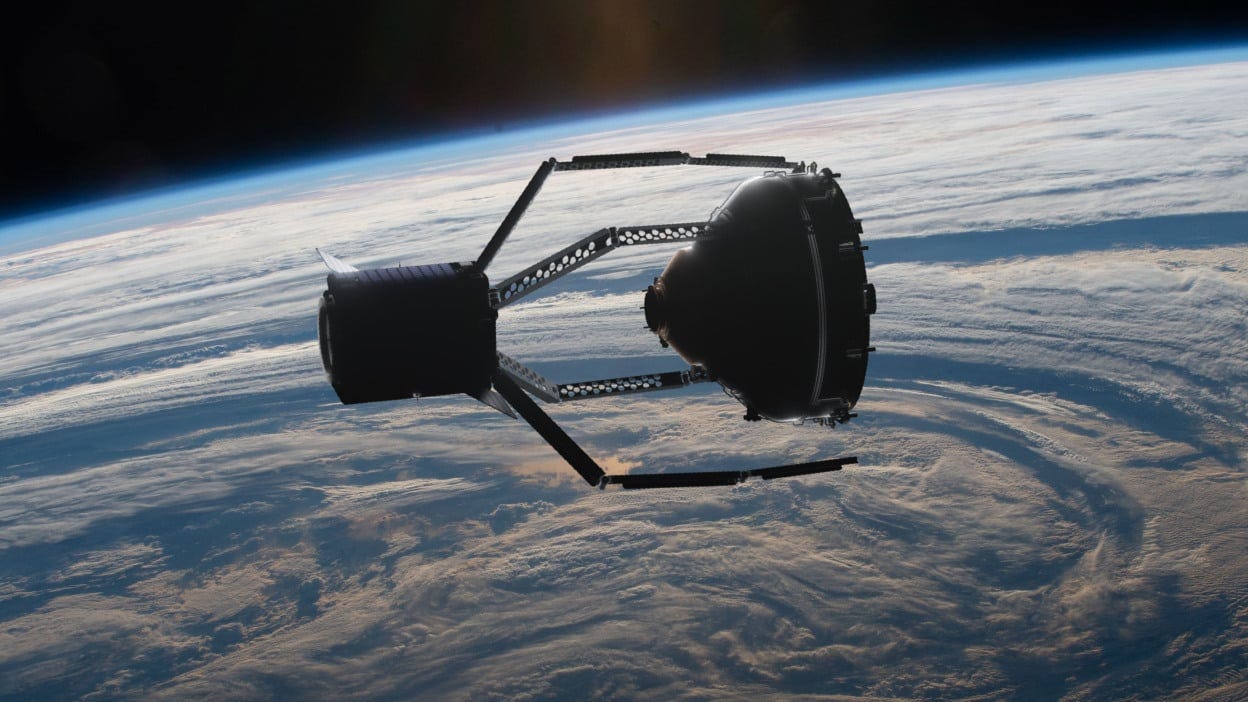
So who pays now? First, governments. Back in 2020, ESA signed a contract worth about €86 million with the Swiss company ClearSpace to remove a single object. Japan’s space agency JAXA funds Astroscale’s missions. But these are government contracts to demonstrate technology, which makes them more of a prototype of a market than a market.
Second, operators pay to dispose of their own satellites, but only when they are forced to. In 2023, the U.S. FCC issued its first-ever space debris fine: Dish paid $150,000 for failing to move the retired EchoStar-7 to the required disposal orbit. The amount is nothing for a company that size, but the precedent matters, because for the first time a violation came with a price.
So a debris removal market won’t appear on its own. Demand can only come from outside: a regulator that sets rules and fines, insurers that give discounts to operators who deorbit their satellites, or a fee for using orbit.
Let’s start with the regulator.
Regulations
While cleaning up what’s already in orbit is still a very murky question, humanity is at least working on not making more debris.
I won’t go into the details of current regulations. The main points are summarized in the table below.
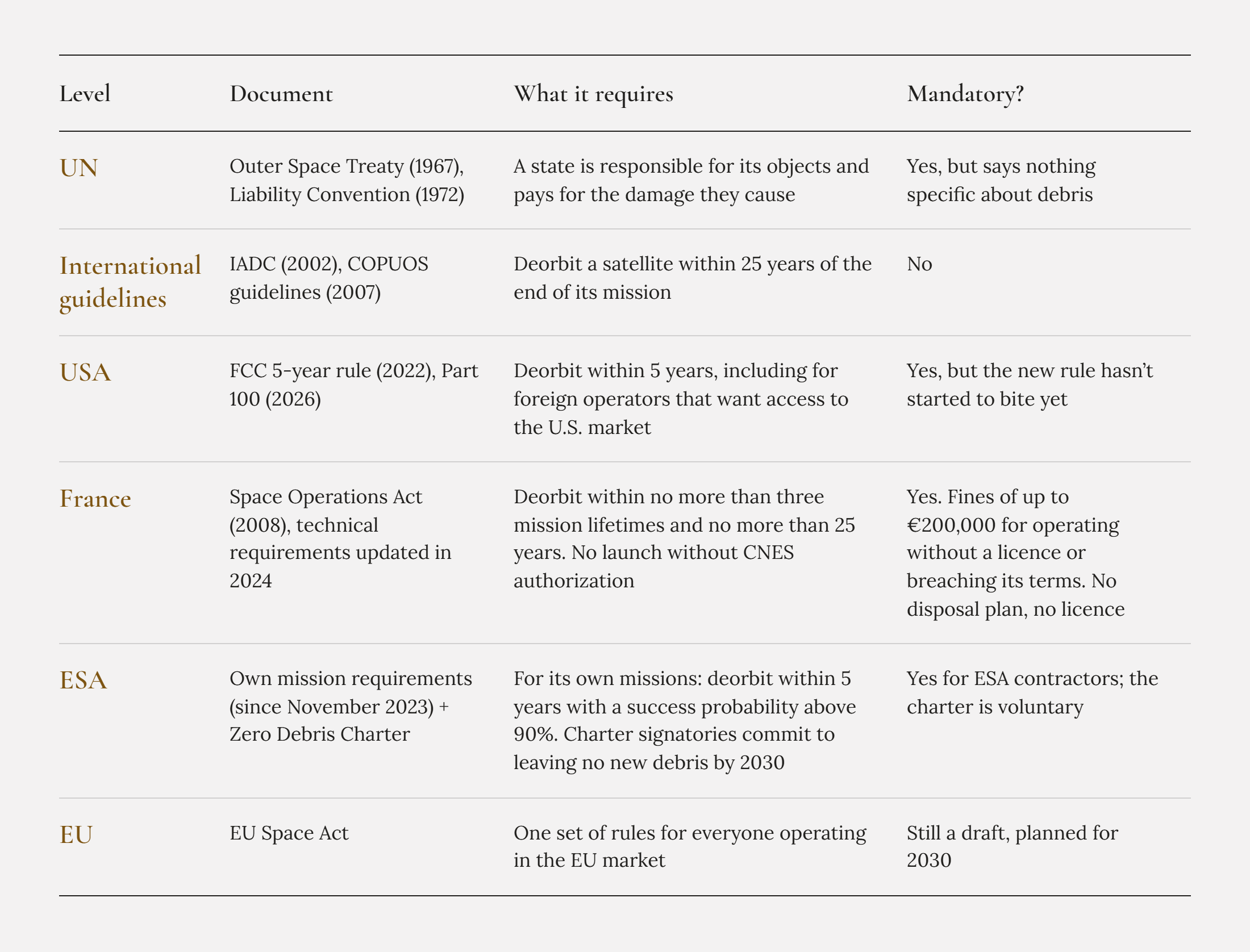
As the table shows, there are no uniform rules. Each country decides for itself, and the result is a patchwork: some have laws with fines, some have only recommendations, and some say nothing clear about deorbiting at all. You can even picture an operator choosing where to register a satellite the way shipowners register vessels in Panama, wherever the rules are softer. What saves the situation is that the United States dominates the market. More than two-thirds of operational satellites are American (Starlink alone makes up two-thirds of the total), and the FCC’s rules also apply to foreign operators who want access to the U.S. market. So the FCC effectively sets the standard for the whole industry, since a large commercial operator is unlikely to give up the U.S. market for a more lenient jurisdiction. But there is one thing none of the rules in the table cover: they all apply only to new satellites. The debris already in orbit still belongs to no one.
Why hasn’t regulation created much demand yet?
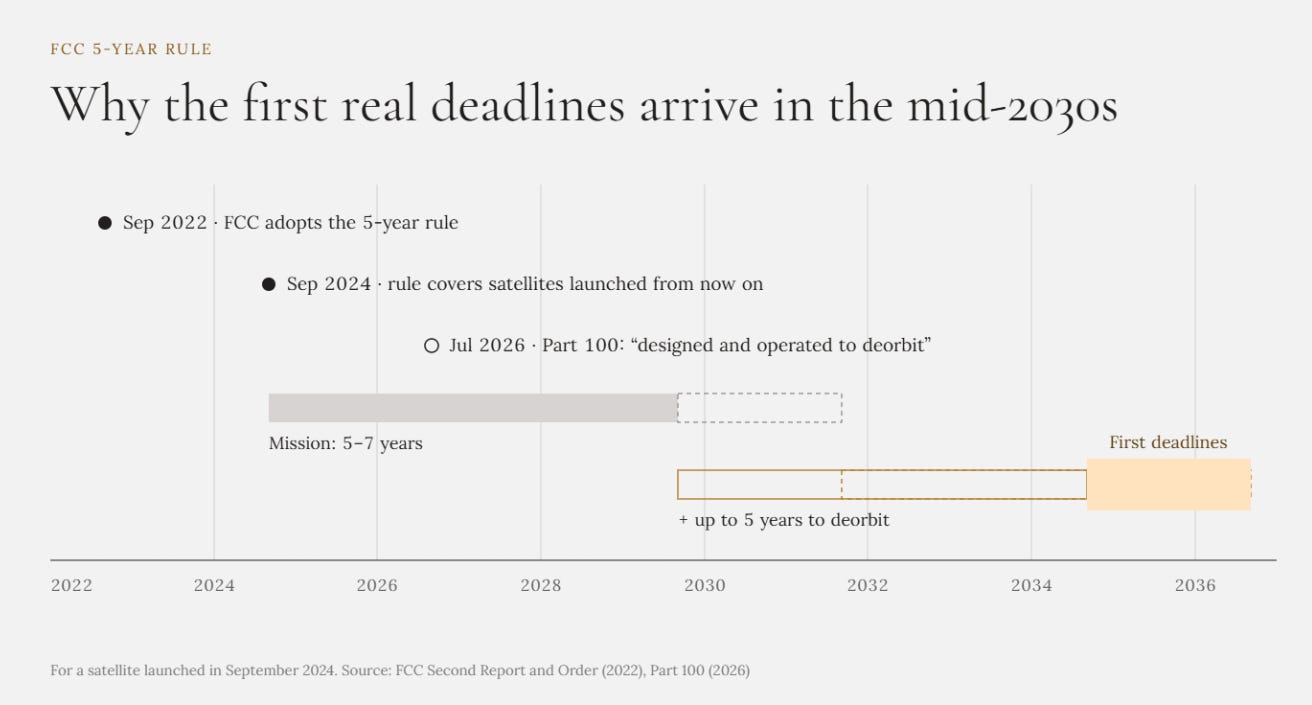
The strictest rule today is the American one. The FCC adopted it in September 2022: a satellite in low Earth orbit has to be deorbited within 5 years after its mission ends, instead of the 25 years that international guidelines recommend. But the rule hasn’t really kicked in yet. It covers only satellites launched after September 2024, and the 5 years are counted from the end of the mission. If a satellite works its standard 5–7 years, the first real deorbit deadlines will come closer to the mid-2030s. Until then, there is almost nothing to check whether operators actually comply and whether anyone will be fined.
What’s more, FCC fines won’t scare anyone: by law, the cap for a typical satellite operator is about $25,000 per day of violation and around $188,000 for a single continuing violation — not much compared to what satellites cost. The real leverage is the license: without a convincing deorbit plan, the FCC simply won’t grant spectrum or access to the U.S. market.
There’s one more nuance: the regulator doesn’t want to strangle the industry. In 2022, the FCC rule was written as an outcome requirement: the satellite must leave orbit within 5 years. But hardware breaks in space, and punishing an operator who did everything right but whose satellite died anyway would scare off startups launching new, unproven spacecraft. So in July 2026, the FCC adopted a new set of rules, Part 100, and changed the wording: now the operator certifies that the satellite is “designed and operated to deorbit within 5 years.” Responsibility has shifted from the outcome to the design. Deorbiting now has to be planned while the satellite is still on the drawing board, instead of hoping it all works out at the end.
There are two sides to this. On the one hand, it’s a loophole: if a satellite is designed correctly but fails, the operator has not technically violated any rules, and the defunct satellite remains in orbit. On the other hand, this creates a direct demand for reliable deorbiting systems that will function even when the satellite itself is no longer responsive. The easiest way to prove to the regulator that a satellite is “designed for deorbiting” is to install a passive device on it.
Where the Market Already Exists: Tracking and Collision Avoidance
Of all the jobs we’ve discussed, only tracking has a real customer. The reason is simple: whoever pays gets the result. Cleaning up someone else’s debris helps everyone at once, while a conjunction warning helps a specific operator protect a specific satellite worth millions of dollars. Demand grows along with the number of spacecraft: 207,000 Starlink maneuvers in half a year means 207,000 decisions, and each one needs precise data on what is flying toward the satellite.
Several things are sold here.
The first is data: where an object is and where it’s going. It’s collected by ground-based radars, optical telescopes and, more recently, tracking satellites right in orbit.
The second is alerts: which object a collision might happen with, when, and with what probability.
The third is software that helps decide whether to maneuver at all and coordinate with the neighboring satellite, so the two don’t dodge in the same direction.
And the fourth, which is becoming more and more important, is the same thing for the military, where the targets are other countries’ satellites instead of debris. Tracking a piece of debris and tracking another satellite is literally the same technology.
The main payer here, as everywhere else in this story, is the government, and above all the military. Selling to commercial operators is harder. The U.S. Space Force gives out basic conjunction warnings for free through Space-Track, and the largest constellations, like Starlink, build their own systems. Companies have to compete with a free government service, so what they sell is accuracy and speed: seeing objects smaller than military radars can see and warning earlier.
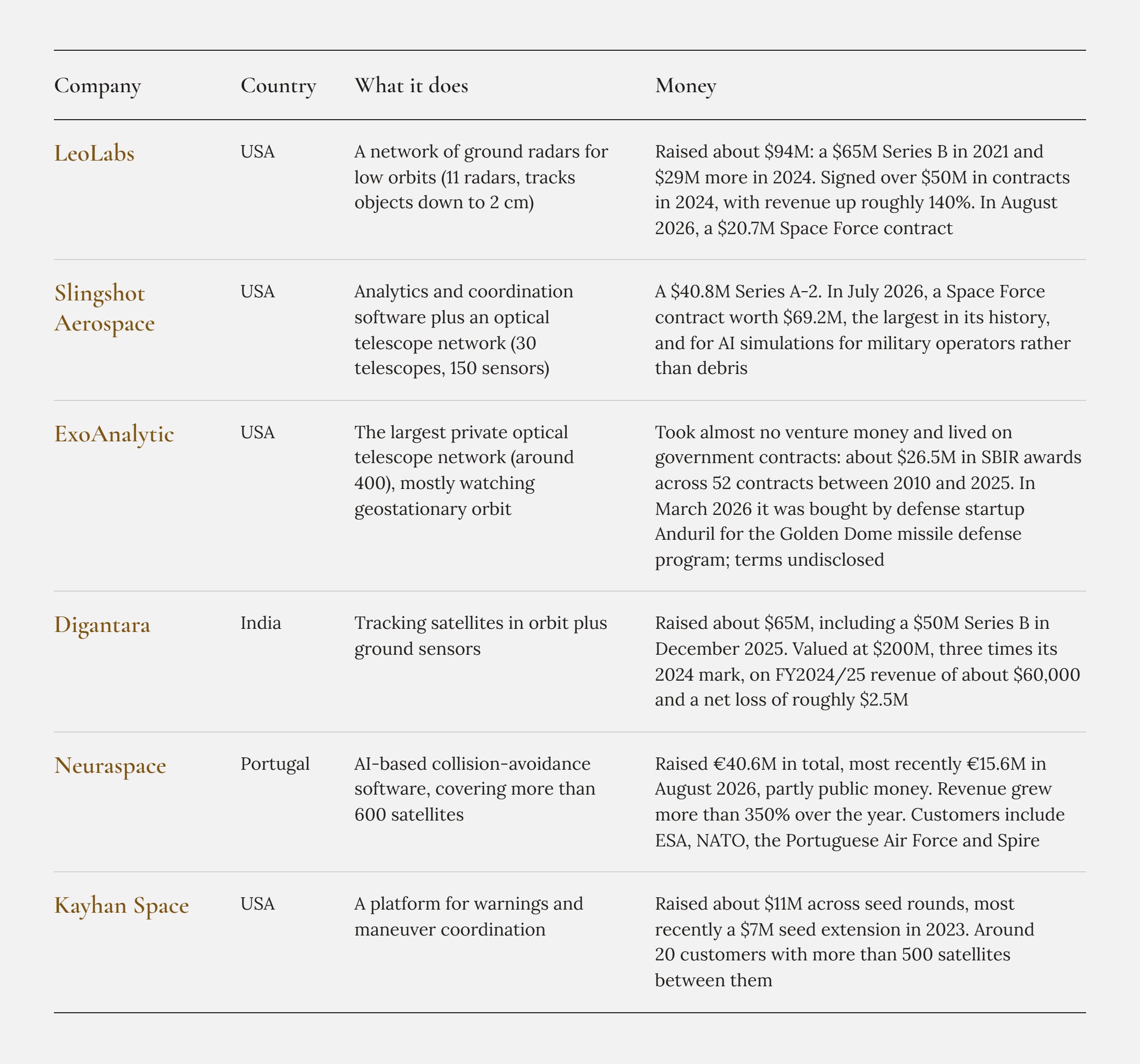
This shows where the companies are heading. India’s Digantara, which started in 2018 by mapping debris from orbit and raised $50 million in late 2025, openly talks about pivoting to military customers and plans to launch missile-tracking satellites. The largest contract in the history of the American company Slingshot (a telescope network plus a service for coordinating avoidance maneuvers), nearly $70 million from the Space Force, isn’t about debris at all. It pays for AI training simulators for military operators. And in March 2026, defense startup Anduril bought ExoAnalytic, which owns the largest private telescope network, for the Golden Dome missile defense program. For an investor the takeaway is simple: the “debris tracking” market is in fact turning into a defense market, with debris as its civilian storefront.
Where the Market Is Taking Shape: Passive Deorbiting
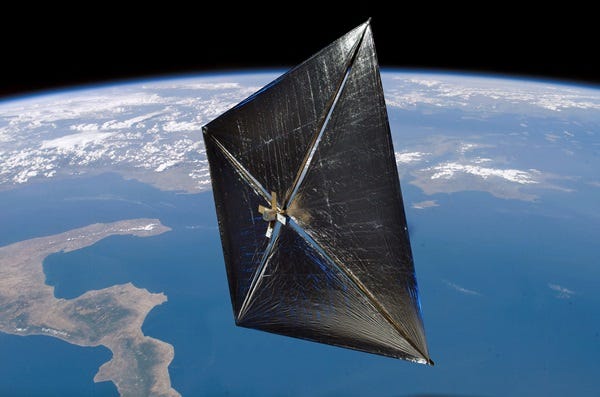
The first market for hardware appears where regulation pushes it. Below about 500 km, a satellite is slowed down by the atmosphere on its own and comes down within a few years, so the 5-year rule is met for free. Above 550–600 km, a CubeSat without propulsion can stay in orbit for decades, and these are exactly the popular sun-synchronous orbits. That’s where you need a way to bring the satellite down faster.
There are two ways to deorbit a satellite. The first is to brake with its own thrusters, but that only works as long as the satellite is alive. The second is a passive device, such as a sail, a tape or an inflatable envelope, which increases the spacecraft’s area so the atmosphere slows it down faster, and it can work even on a dead satellite. Small satellites fail often, so ESA’s requirement of a 90% probability of successful disposal and the FCC’s new “designed to deorbit” wording both work in favor of passive systems. These devices are made, for example, by Germany’s HPS (the ADEO sail), the American companies Vestigo Aerospace and Tethers Unlimited, and the startup I work at. We’re still in stealth mode, so I can’t say much about what we’re building — but I can share what I’ve picked up working on this. So this section is a view from the inside.
Here’s the honest part: no industry report has a separate market for “deorbit hardware.” Propulsion for small satellites sells well. The satellite propulsion market is estimated at around $2 billion and forecast to reach $4.7 billion by 2031, France’s Exotrail raised $58 million in its Series B, and Enpulsion and ThrustMe ship thrusters in volume. But nobody buys a thruster in order to deorbit. You buy it to raise your orbit, hold your slot in the constellation and dodge close approaches, and end-of-life disposal comes as a bonus. So those two billion don’t belong in the “space debris” column. Passive devices, like the ADEO drag sail from Germany’s HPS, are the only thing sold specifically for deorbiting, and they still ship in ones and twos.
You might ask: problem solved, then? If satellites have thrusters, they can deorbit themselves. Except most of them don’t. The majority of small satellites fly with no propulsion at all — a thruster costs money, mass and volume, and for a cubesat built on a university or startup budget it’s usually the first thing cut. Those satellites have exactly one way down: the atmosphere, on whatever timeline the altitude dictates. And a satellite that dies early takes its thruster down with it — a dead bus can’t fire anything.
A fair question: doesn’t the sail increase the satellite’s area, and with it the chance of hitting something? It does, but collision risk depends on the product of area and time spent in orbit. The area goes up, the time goes down, and which one wins depends on the specific satellite, its altitude and the size of the sail. That’s why it’s calculated separately for each mission.
But the market is still small. The buyers are mostly operators of small satellites without propulsion in higher orbits, and only a limited number of those are launched each year. The largest constellations aren’t interested: Starlink flies low and deorbits its satellites with thrusters. Many operators meet the rule for free anyway, just by picking a lower orbit.
The market could grow if the EU Space Act requires reliable deorbiting even when a satellite fails, if insurers start giving discounts for a backup system, or if more constellations move to orbits between 550 and 800 km. With new satellites, the path is at least clear. Old debris is harder, and the main question there is who will pay for it.
Who Could Pay
The first candidates are insurers. In theory, they are best placed to put a price on the risk: a policy would cost more for an operator who can’t deorbit its satellite and less for one that has a backup deorbit system. The price could also depend on the orbital altitude, based on how crowded it is.
In practice, space insurance is a small market that has been losing money in recent years because of large failures of geostationary satellites. LEO constellations are often not insured at all, since it’s easier to launch a replacement. Third-party liability insurance in orbit is required only by some countries, France among them. So the lever exists, but for now it’s weak.
The second candidate is governments. Most of the debris by mass is their rocket stages and satellites, so if anyone ends up paying to clean up the old stuff, it will be them. The model could look like what happened when NASA started buying ISS cargo delivery from private companies: the government acts as the anchor customer and that’s how the market takes shape. ESA and JAXA have already made the first moves, but so far these are one-off demonstration contracts.
The third candidate is the large constellations. They have more to lose than anyone else, with thousands of satellites in the same orbital shells. A realistic scenario is that they pay to remove their own dead spacecraft so those don’t get in everyone else’s way.
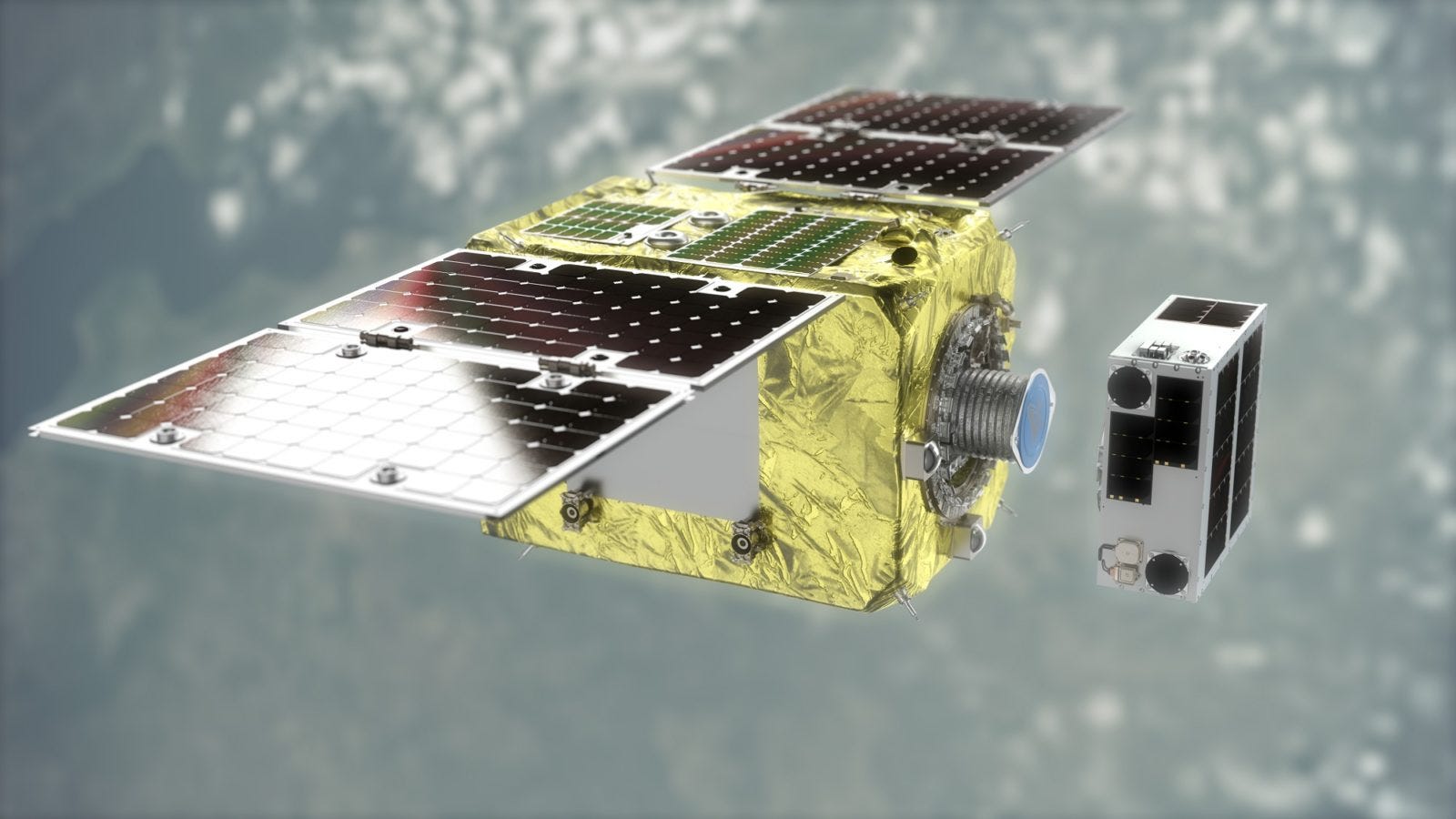
The first step has already been taken: Astroscale is preparing the ELSA-M mission to remove a failed Eutelsat OneWeb satellite. For now, though, Astroscale is covering most of the cost itself with support from the UK Space Agency and ESA, and the operator provides the target.
The main thing constellations can do is deorbit their own satellites on time, with thrusters or passive devices, rather than clean up after others. For the deorbiting market, they are the biggest potential customer.
Verdict: Is There a Market?
The technology definitely exists. But a “space debris cleanup” market, in the form people usually imagine it, doesn’t.
There are three separate markets, and each one lives exactly as far as it has someone paying for it.
Tracking debris is a market that already works, but the money comes mainly from the military, so in essence it is a defense market.
Not creating new debris is a market that is only taking shape. Its demand comes from regulation, it is narrow, and it won’t really take off before the 2030s, when the EU Space Act comes into force and the first real deadlines under the FCC rule arrive. And that’s even though the technology is largely ready.
Cleaning up old debris has no market, and for the next 5–10 years it will live on government contracts and demo missions, while companies make their money on satellite servicing.
A major collision in a crowded orbit could change the picture. One already happened in 2009, when Iridium 33 collided with Cosmos 2251, and the next one could speed up regulation the same way plane crashes sped up aviation safety rules.
In space, just like on Earth, we only fix problems once things get really bad.
What do you think about the market and the technology for cleaning up space debris and deorbiting satellites?
This is what I work on day to day, so I’m always curious how it looks from the other side of the table — whether you’re an operator deciding what to put on your bus, an investor looking at this space, or someone who thinks the whole thing is overblown. Find me on LinkedIn and tell me what I’m missing (or marat@spaceambition.org)
Space Ambition just turned four. Around 200 articles so far, all free, no paywall, and we’re keeping it that way. If our pieces have been useful to you, you can chip in through DonateOpen
What happens to a satellite once it is “deorbited”? Does it blow up? Can it be directed to land somewhere specific? In imagining how to widen the market scoping, is it conceivable that some component of the satellite is valuable enough to be recovered, repurposed, or “delivered” somewhere as an additional value stream?
Fascinating insights we don't often see in more "mainstream" media. Thank you!