

Space-Based Solar Power (SBSP) and Its Current Bottlenecks, Revisited: Answering Readers’ Best Arguments
Our original article on SBSP stood on caution around economics and scaling. The comments of our readers and the latest evidence re-weight them.


Issue 140. Subscribers 69,489.
A good comments section is a stress test. The one under our SBSP post passed. Several readers - engineers, program leads, and energy modelers - raised points worth folding back into the analysis. This follow-up answers those arguments and extends the thread where they lead. It also highlights some of the places where nuances are hidden in our short-format work. By the way, we plan to write one more article to extend this topic, so please provide your ideas and insights in the comments section.
Disclaimer: We at Space Ambition are always happy to see bold ideas, and we would like to live in a world where solar panels harvest energy in orbit and beam it to Earth. How cool is that? This is why we carefully explore the technical feasibility and economic viability of this solution. We hope this will help investors to better understand the topic. If you are a DeepTech VC and you have any questions, please feel free to reach out to ivan@spaceambition.org. We’d be happy to chat.
To put you in context, in our original piece, we looked at space-based solar power (SBSP) through an investor’s lens, using the Levelized Cost of Energy (LCOE) as a yardstick. LCOE, expressed in dollars per megawatt-hour, is simply the minimum price a supplier must charge to recover all costs—a shorthand for economic competitiveness. We showed that three factors largely set the theoretical floor: launch cost per kilogram, panel mass per square metre, and panel price per kilowatt. With optimistic numbers, SBSP can look promising, but under more realistic assumptions, its LCOE comes out near $70/MWh, which is still uncompetitive against today’s terrestrial PV. More importantly, the real bottleneck may not be panels or rockets at all, but the absence of gigawatt-scale microwave transmitters, rectennas, and orbital structures - hardware that has never been built. For that reason, we argued that incremental demonstrations in orbit or with lunar/ISRU manufacturing will be needed before economics or engineering can truly scale.
Wireless power transfer isn’t new: scaling is the only question.
One commenter reminds us that point-to-point RF energy transfer sits inside global communications infrastructure; beam-forming and aiming are industrial practices. He’s right on the physics - and, increasingly, on the demonstrations.
On the microwave side, Mitsubishi Heavy Industries transmitted 10 kW over 500 m back in 2015, a clean ground demo that validated end-to-end control and reception at useful power densities. JAXA teams separately beamed ~1.8 kW over ~50–55 m, closing the DC-to-RF-to-DC loop at laboratory scale.
And in orbit, Caltech’s MAPLE experiment has already beamed detectable power to Earth and switched receivers in space: proof that flexible, lightweight phased arrays can survive launch and operate on-orbit. Though the term “detectable” hints that the efficiency has not been worked out at this stage.
So yes: transmission per se is not the bottleneck. The hard part is scaling to kilometer-class apertures that hold phase and flatness tolerances, survive thermal warping and micrometeoroids, and stay precisely pointed across hundreds of thousands of kilometers of path length. That’s not a physics problem, it’s a system engineering and economics problem (and a big one).
You can’t compare intermittent terrestrial solar LCOE to a firm SBSP LCOE.
Our readers are exactly right: LCOE of intermittent terrestrial solar (or PV, short for PhotoVoltaics) cannot be compared directly with a firm source like space solar. LCOE alone undervalues firm power. The proper comparison is VALCOE (value-adjusted LCOE), or better, a whole-system optimization that prices firming, overbuild, storage, transmission expansion, and curtailment.
LCOE is a good retail price tag for a project. VALCOE is the price tag in context - it adjusts for when a plant produces (energy value), how much it helps at peak (capacity value), and how it affects balancing (flexibility value). That’s the metric the IEA uses to compare technologies on a system footing. In short: LCOE tells you the cost to make a megawatt-hour; VALCOE tells you what that megawatt-hour is worth to the grid. When electricity shows up at the right time and place, covering peaks or relieving a congested node, its energy and capacity value rise, so VALCOE can exceed LCOE (a price premium). When it arrives at the wrong moment or location - creating a midday surplus that needs moving or storing - balancing, storage, and transmission are needed, so VALCOE can fall below LCOE (a penalty).
A recent Frazer-Nash/London Economics (ESA) study puts SBSP at €88.5–€155.5/MWh in 2040 price terms (country basket average), with VALCOE = LCOE for SBSP because its time-of-delivery resembles nuclear in their framework (immediate consumption: no penalty, no bonus). That band is already in the same conversation as many dispatchable options, and it improves further under lower financing costs.
At the other end of the spectrum, NASA’s 2024 cost work is deliberately conservative: $610/MWh (RD1) and $1,590/MWh (RD2) baselines. But the same analysis shows that realistic improvements - launch cost declines, higher specific power, better RF/DC conversion, lower WACC - can, in the optimistic case, compress LCOE towards $40–$80/MWh. The range is wide because assumptions matter.
In the same table, you can see what happens to terrestrial solar once system effects are priced in. In the ESA/Frazer-Nash/London Economics study, utility PV’s LCOE is €83.9/MWh (2022 euros). It’s VALCOE rises to €101.9/MWh once you account for timing and capacity value: about a +21% uplift. That’s exactly the effect Soltau notes in UK system modeling, and it’s consistent with the European studies. Pair that solar with a modest 4-hour battery, and the story flips: PV+storage LCOE is €93.2/MWh, VALCOE €87.8/MWh, because storage gives back capacity and shifts energy to the hours the system needs it.
That captures the intuition some readers already have from daily life: a cheap kilowatt-hour at noon (low consumption, high energy production due to intensive sunlight) is not the same thing as a reliable kilowatt-hour at 7 p.m. when the grid is straining (high consumption, low energy production due to declining sun). VALCOE is just the formal way of pricing that difference.
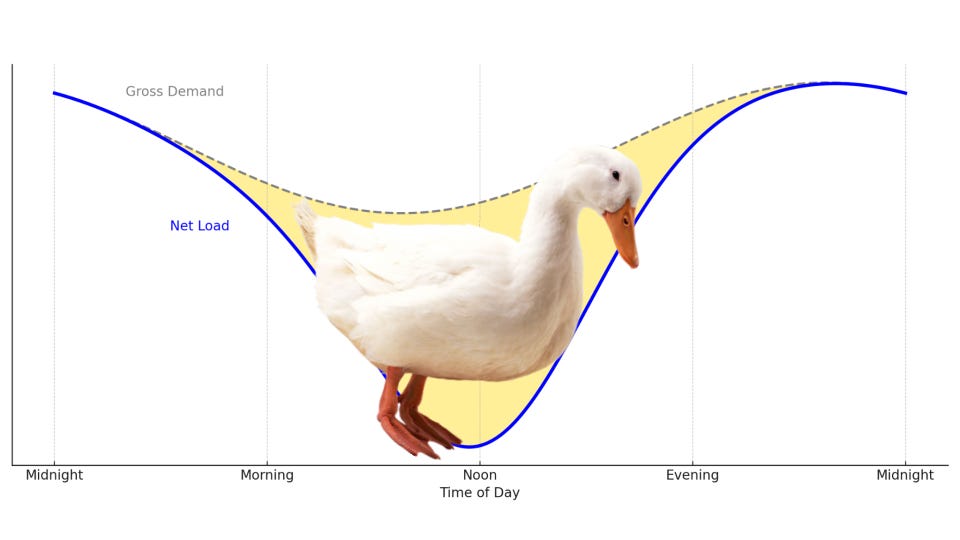
Now, how much higher than LCOE does PV’s VALCOE run in the wild? It depends on the sun, on demand shape, on transmission, and on what the local market uses for “firming.” The geographic intuition follows immediately. In sunny, summer-peaking systems with good transmission and flexible neighbors, PV’s VALCOE can sit close to its LCOE - especially if you co-site storage. In winter-peaking, evening-peaking, or already-solar-heavy systems (where ELCC for new PV is low), the gap widens into the tens of €/MWh (or more) unless you add storage or other flexibility. If you only remember one concrete comparison, use the European basket above because it puts everything on one line:
PV (standalone): €83.9 → €101.9/MWh (VALCOE > LCOE as system effects bite).
PV + 4h storage: €93.2 → €87.8/MWh (storage restores value; VALCOE < LCOE).
SBSP (NOAK): €88.5/MWh and VALCOE = LCOE (it’s already firm).
Where does that leave the comparison? On a pure LCOE basis - the metric an energy-intensive factory might use - our argument stands: SBSP only rivals terrestrial PV under very optimistic assumptions regarding launch cost ($/kg), panel mass (kg/m²), and panel price ($/kW). On a VALCOE basis - the metric that matters to grids - in many geographies, SBSP competes with PV plus storage and other flexibility. In both cases, though, the outcome hinges on whether kilometer-scale phased antenna arrays can be built and operated cheaply enough.
Can we actually build kilometer arrays that stay rigid and phased?
This remains the hardest unsolved engineering risk.
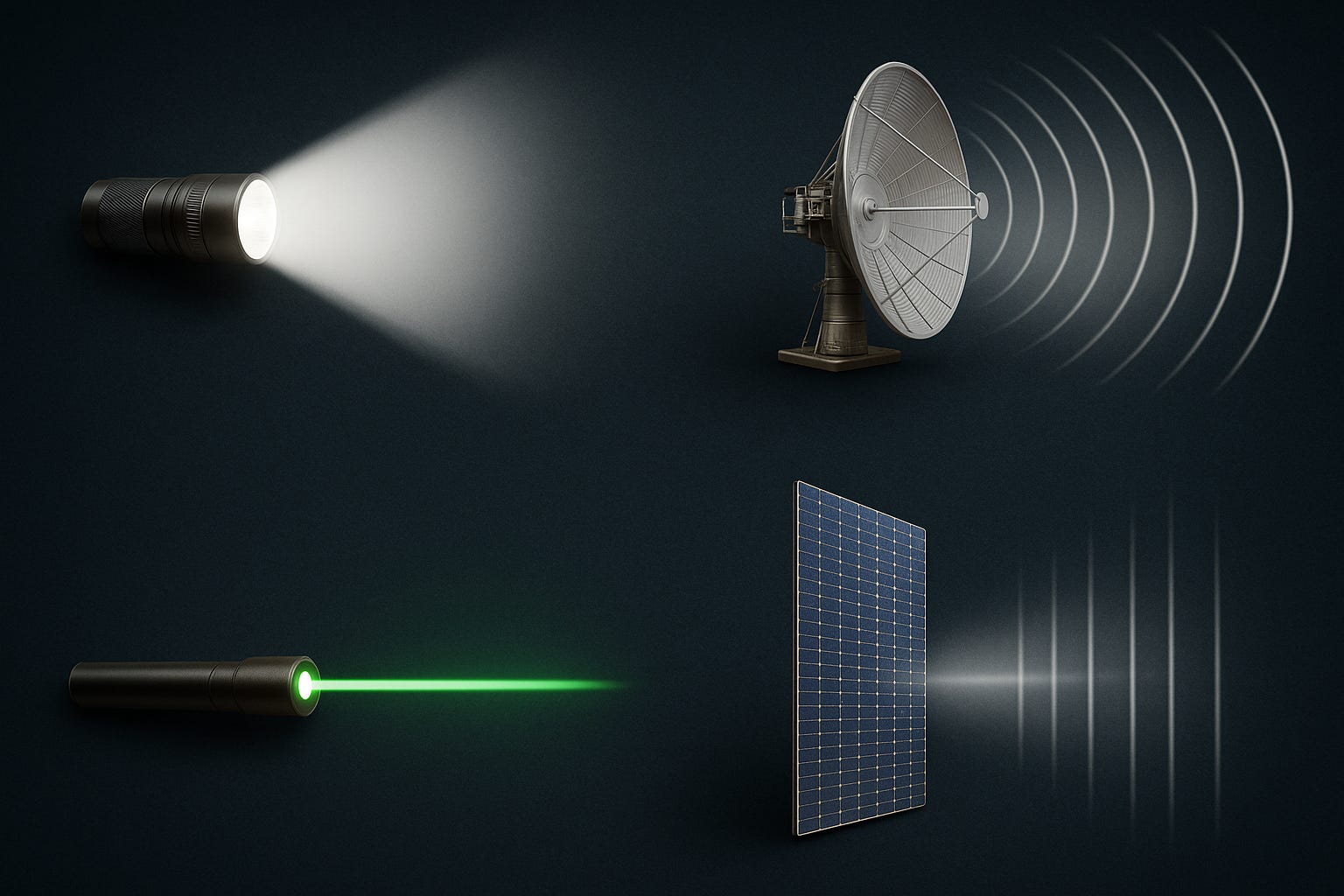
A regular antenna is like a torch: the signal spreads out in all directions—useful nearby but quickly fading with distance. A phased array, by contrast, is like a laser pointer: the waves are coherent and concentrated, so the beam stays strong and can be steered precisely without moving the hardware. In a laser, this focus comes from a quantum process called stimulated emission, where atoms line up their light waves in phase. A phased array achieves a similar effect not through the physics of atoms, but through electronics that adjust the phase of each tiny antenna element, so that all of them add up coherently to form a sharp, steerable beam.
The CASSIOPeiA architecture (Space Solar / IECL) pursues a solid-state, retrodirective phased array with continuous sun-pointing reflectors, designed to simplify moving parts and spread manufacturing across modular tiles. The UK program has advanced ground meter-scale demonstrations (HARRIER; 360° retrodirective power routing) and just completed a Phase 0/A concept study under UKSA/DESNZ support.
European SOLARIS work at ESA is likewise structured as a technology and system-level down-select toward a 2025 decision, to de-risk aperture, controls, assembly, and regulatory issues before heavy capex.
Therefore, we have no precedent for kilometer-scale arrays in space that maintain shape and phase, nor robust evidence of what they would cost.
On-orbit maintenance and degradation.
NASA’s on-orbit analysis of the ISS’s early solar wings found a power decline of ~2.7%/yr in early years (in maximum-power-point (MPP) terms) - numbers that cascade into SBSP O&M and repowering assumptions if you choose heritage cells. Modern multi-junction cells perform better, but cost significantly more than assumed in our simple analysis. The message therefore stands: degradation is continuous, and must be budgeted.
Early units will be expensive; that’s normal - why do we insist on small demos?
Our readers are absolutely correct: every cleantech curve starts off costly. We’re explicit that policy support and procurement design are required for FOAK (First of a Kind) - exactly as they were for wind and solar. The map that emerges across is simple:
FOAK is expensive (NASA baselines; Thales FOAK in the €150s/MWh), but it is not the destination: we should not focus on this cost in large-scale projects.
NOAK (N of a Kind, sometimes “Nth of a kind”, in this case 10th-of-a-kind) under reasonable assumptions crosses into double-digit €/MWh.
System value (firming grid portfolios, less transmission build-out, less curtailment) makes those higher-€/MWh worth more than intermittent low-LCOE equivalents, thus stimulating demand and triggering a downward learning curve.
We agree that first-of-a-kind units carry higher costs and that repetition lowers them - our focus is on the steps that make that transition cheaper for the investors. Our question is how we cross that chasm without burning capital or credibility. Perhaps, the answer isn’t romantic: it’s a sequence of small, purpose-built demonstrations that convert unknowns into numbers. Each demo should do one thing: remove a price premium the market is attaching to SBSP because something is unproven. Small demos lower the cost of money. In other words, a handful of convincing demos can lower CAPEX, calm the investors, so your interest rate and contingencies fall. That can move LCOE as much as chasing a few energy conversion efficiency points, because they make money cheaper and construction leaner. And when you improve efficiency, too, you get both gains.
Small demos also help us learning precisely where it matters. SBSP is multiplicative: a few points of loss at each stage multiply into a big number. You don’t improve that with a grand gesture; you improve it by letting engineering teams iterate in the loop.
So yes, FOAK will be expensive, but FOAK should not be your first experiment with beam safety, rectenna yield, or modular assembly.
Our original article stood on caution around economics and scaling. The comments and the latest evidence re-weight them. The physics and early demonstrations are doing what physics and demos do: closing technical deltas. The economics are doing what cleantech economics do: overcoming FOAK, rewarding learning curves, and making finance as important as technology. If the aperture and on-orbit build problems find robust, modular answers - and if finance shows up with patient capital - SBSP belongs in the toolkit for a firm, low-carbon grid.
This continuation was focused on highlighting reader arguments, not rehashing the full article. In upcoming work, we’ll put these assumptions into a detailed parametric model. Thank you all very much for your comments. If you would like to continue the discussion and contribute, please email at ivan@spaceambition.org. We are always happy to discuss the details.
Ivan,
This article clearly points to some of the challenges ahead. Fortunately, many of these challenges have been known and studied for decades. Better yet, the electronics and processing needed to implement these solutions have improved dramatically in the intervening years, dropping costs while expanding capabilities.
Challenge #1: “The hard part is scaling to kilometer-class apertures that hold phase and flatness tolerances, survive thermal warping and micrometeoroids, and stay precisely pointed across hundreds of thousands of kilometers of path length.”
• This problem was identified and a solution proposed during the 1977-1981 NASA/DOE SBSP study. From section 2.3 SPS Hybrid Phase Control Method in the “Automatic Phase control in Solar Power Satellite Studies – Final Report” dated Feb 15, 1978 [1]
o “This method is a hybrid of the single frequency method using retrodirective principle and the SPS feedback control via ground telemetry and command method. This method combines the good points of both the methods, i.e., it uses the retrodirective principle for automatic direction finding while all the errors in beam pointing, e.g., due to frequency separation, oscillator instability, the random errors generated by the thermal gradients and the antenna structure flexing, etc., are taken care of by the ground control processing.”
o This report then outlines the methodology and expected performance to maintain phase when subjected to these perturbations. Additional reports on the National Space Society SBSP collection [https://nss.org/satellite-power-system-concept-development-and-evaluation-program/] provide refinement and additional analysis.
• The survivability to Micrometeorites and Orbital Debris (MMOD) was also raised in another study. The “DOE 1980 Questions and Answers” [2] provides an answer to the meteorite question. From section I.2
o “How vulnerable is the SPS to partial or total destruction, especially the space segment? For example, do meteor showers pose any threat to the space segment?”
o “The large scale of the satellite tends to make it somewhat less vulnerable than would be the case otherwise. The large size means that redundant subsystems can readily be provided and indeed may be mandatory for reliability reasons.”
o Many of the modern designs are fully decentralized so even considerable damage would not disable an SBSP satellite. Additionally, decades of experience with the ISS shows that even in crowded orbits, damage to solar panels is rare and minor.
• On an additional note, most proposed SBSP orbits are in GEO or closer, so beam distances should max out at about 36,000 km. Only with lunar surface, lunar orbits or L2 based system would beam distance be hundreds of km.
Challenge #2: Economics: “On a pure LCOE basis - the metric an energy-intensive factory might use - our argument stands: SBSP only rivals terrestrial PV under very optimistic assumptions regarding launch cost ($/kg), panel mass (kg/m²), and panel price ($/kW). On a VALCOE basis - the metric that matters to grids - in many geographies, SBSP competes with PV plus storage and other flexibility.”
• Power generation is no different than any other good. There is rarely a single value that determines market success. There are multiple metrics that drive generation investment. CAPEX for a plant, CAPEX for incremental expansion, OPEX, dispatchability, time to commissioning, connection queues, grid access, grid upgrade costs, plant lifetime, tax incentives, site cost, capacity, capacity factor, and much more all influence a decision. Both power generators and power consumers are subject to these considerations.
• A SBSP FOAK does not need to be competitive in all situations, in all markets, at all times to make sense. Energy for remote and energy intense operations command a premium. Energy at peak hours commands a premium. There are many niches to enter the market where the risk and the payoff make sense even for a FOAK.
• For a SBSP NOAK, much of this comes down to the learning curves inherent in a technology. With proper architecture focused on modularization, both economies of scale and Wright’s Law should apply. Economies of scale will distribute the fixed engineering and tooling costs across the production runs. Wright’s law will help drive down costs throughout the supply chains.
• Unless there is something unique about SBSP, it will have a learning curve that parallels the underlying technologies. Space solar cell costs will likely parallel the terrestrial market cost reductions as volume increases. Satellite bandwidth costs drop 45% for every cumulative doubling in capacity in orbit [3]. Solar has a 20% drop for every cumulative doubling. Industrial robots are dropping at nearly 50% for every cumulative doubling. [4] The cost of robots in space is closely parallels what happened on the ground. [5] NASA rates aerospace at a 15% decrease for every cumulative doubling. [6] Analyzing launch costs shows the potential for up to 90% cost reduction in every doubling of launch mass volume. [7] All of these point to the potential for dramatic cost reduction as capacity scales. Today, the estimated cost of a Starlink satellite is less per kg than the cost of a laptop. [8]
Challenge #3: “Can we actually build kilometer arrays that stay rigid and phased? This remains the hardest unsolved engineering risk.”
• Agreed, this is probably the biggest challenge. However, there is compelling evidence that it is solvable, scalable, and costs can drop quickly. The two key capabilities required are structural assembly in orbit and phased array tuning after assembly. While these two things have not been combined, the core capabilities are established. Once an assembly and tuning process is proven, scaling should be primarily a matter of repetition, driving down costs.
• The largest assembled structure in orbit is the ISS. It is 109 by 51 meters. [9] The largest phased array to date is the AST BlueBird at 64 sq meters. [10] Their next generation satellite will more than double the solar array and antenna areas to about 199 square meters. [11]
• While these objects are not the scale of proposed SBSP satellites, they demonstrate key parts of what will be needed.
• The ISS established that large and complex structures with structural, electrical, hydraulic, and pneumatic interfaces can be built in orbit. Critically, once robotic arms were available, the assembly and maintenance migrated to robotic operations. SBSP satellites are primarily structural assembly, so only a subset of existing capabilities is required.
• The BlueBird provides evidence that large phased-arrays can be successfully operated in space after deployment from a faring configuration. While a deployment mechanism can simplify alignment, precise alignment can also be achieved with the attachment mechanisms required to combine structures.
Again, Ivan, thanks for starting this conversation. We see the benefits that successful development of space-based solar power offers. We’re acting on the belief that all of these challenges can be overcome. The ability to make this happen builds on decades of research. There is a lot more that can be said. But actions and progress will speak louder than any words.
Best,
Dr. Edward Tate
CTO | Founder
https://virtussolis.space/
References
[1] https://nss.org/wp-content/uploads/2017/07/1978-Automatic-Phase-Control-Lincom.pdf
[2] https://nss.org/wp-content/uploads/2017/07/SSP-DOE-1980-Questions-And-Answers-About-SPS.pdf
[3] https://humanprogress.org/starlink-is-riding-down-the-wrights-law-cost/
[4] https://www.linkedin.com/posts/edtate_price-production-robots-activity-7267145112609067008-hn7E
[5] https://www.linkedin.com/posts/edtate_robots-isam-space-activity-7267571455452753920-66OU
[6] https://en.wikipedia.org/wiki/Experience_curve_effects
[7] https://www.linkedin.com/posts/edtate_energy-space-spacetech-activity-7112208019001679873-KpHi/
[8] https://www.linkedin.com/posts/edtate_satellite-nanosats-engineering-activity-7284627171728347137-I5K0
[9] https://www.nasa.gov/reference/international-space-station/
[10] https://en.wikipedia.org/wiki/AST_SpaceMobile
[11] https://www.pcmag.com/news/despite-spacex-protests-fcc-clears-ast-spacemobiles-massive-satellite
Ivan, we appreciate your willingness to listen - most analysts have not gone as far as you have. Since you are responsive, I'll point out a few more items.
First - WPT does not require a flat (nor rigid by extension) transmitter, just that the beam achieves coherence. You cited the HARRIER experiment, which leverages a number of technologies to achieve coherence from a helical transmit array. Flatness just reduces the required sophistication of the controls.
Second - PV performance degradation is well understood. There are a number of countermeasures available, and specifically lithium doping plus annealing radiation damage to cSi PV cells has been known for over 50 years (https://ntrs.nasa.gov/api/citations/19720002415/downloads/19720002415.pdf). Multiple space PV startups are producing space-rated cSi or Perovskite cells.
Last - VALCOE is not a metric useful to an energy business, but rather a way to weigh energy technologies at the grid level. LCOE is a floor operating cost for a producer, and the total cost for consumer includes adding firming costs. To provide value to a consumer, a producer must strive to lower total cost with sufficient revenue to pay for the asset plus operating cost. I would recommend Lazard's methodology of assessing LCOE + firming (https://www.lazard.com/media/uounhon4/lazards-lcoeplus-june-2025.pdf).
John Bucknell
CEO - Founder
Virtus Solis Technologies
www.virtussolis.space