

SpaceTech Expo Bremen and Dubai Airshow
A few weeks ago, the Space Ambition delegation attended two large space trade shows. Below, our co-founders share their reflections and key takeaways from these events.


“SpaceTech Expo was an exceptional experience!
I got a huge boost of inspiration and renewed professional interest. For three days—from November 18 to November 20, 2025—Bremen once again became a focal point of the European space ecosystem.”
Ivan Khrapach:
“I spent four days at the Dubai Airshow. My primary objective was to attend the Space Conference, a two-day event held with the support of the UAE Space Agency. The Dubai Airshow hosts a dedicated space conference that focuses on sustainability, security, and innovation in the space domain.“
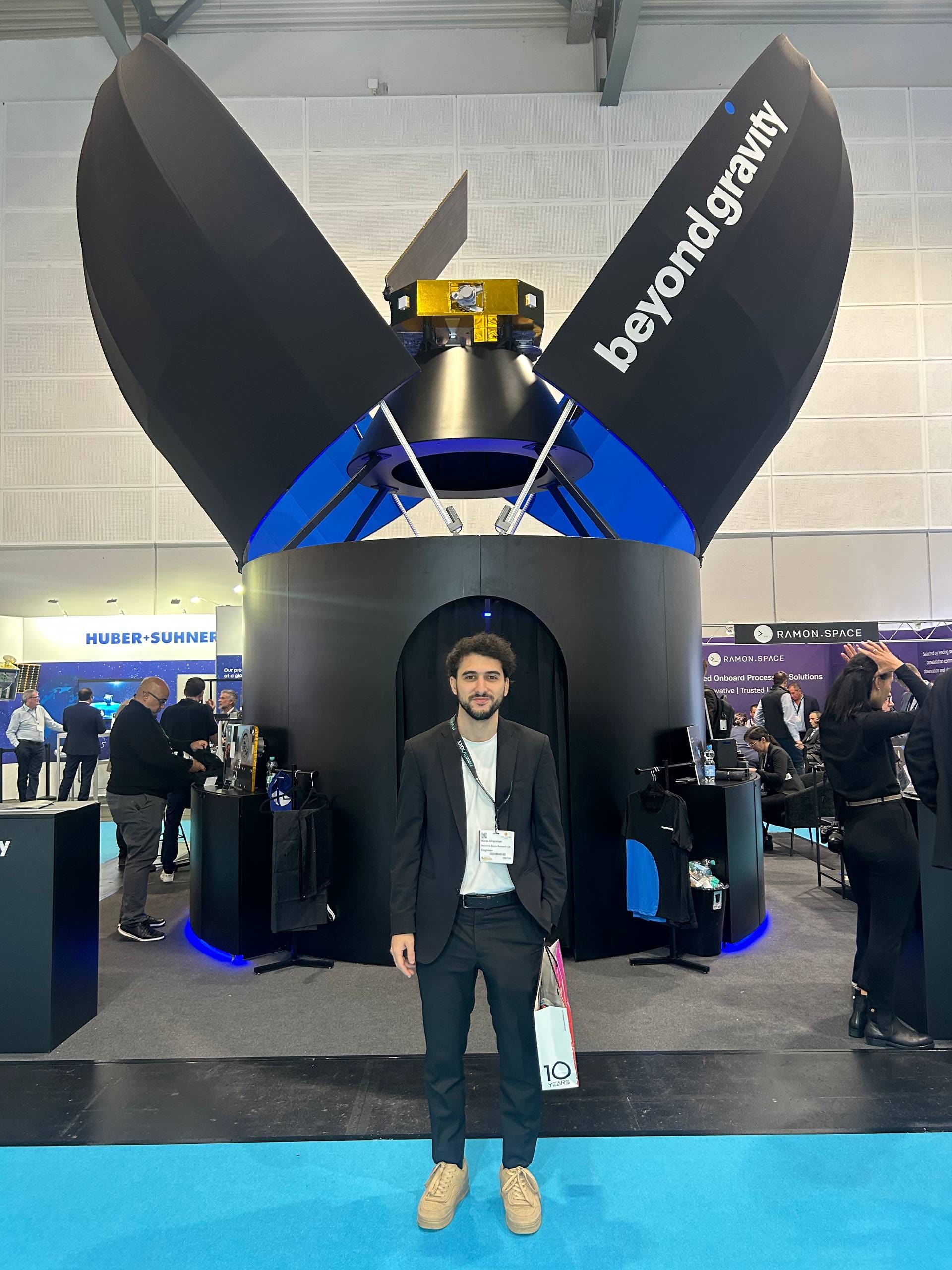
Space Tech Expo Europe 2025 attracted approximately 10,000 industry professionals and more than 950 companies, from large agencies to young engineering teams. Participants were able to schedule B2B meetings in advance using a well-designed mobile application. The program also included panel discussions, keynote presentations, and startup pitch sessions. A notable addition this year was the Skills Lab, which hosted workshops on topics such as space law, safety, orbital management, emerging satellite technologies, and the use of artificial intelligence. Separate discussions were devoted to the future of European space regulation and the prospect of a unified legal framework for the sector.
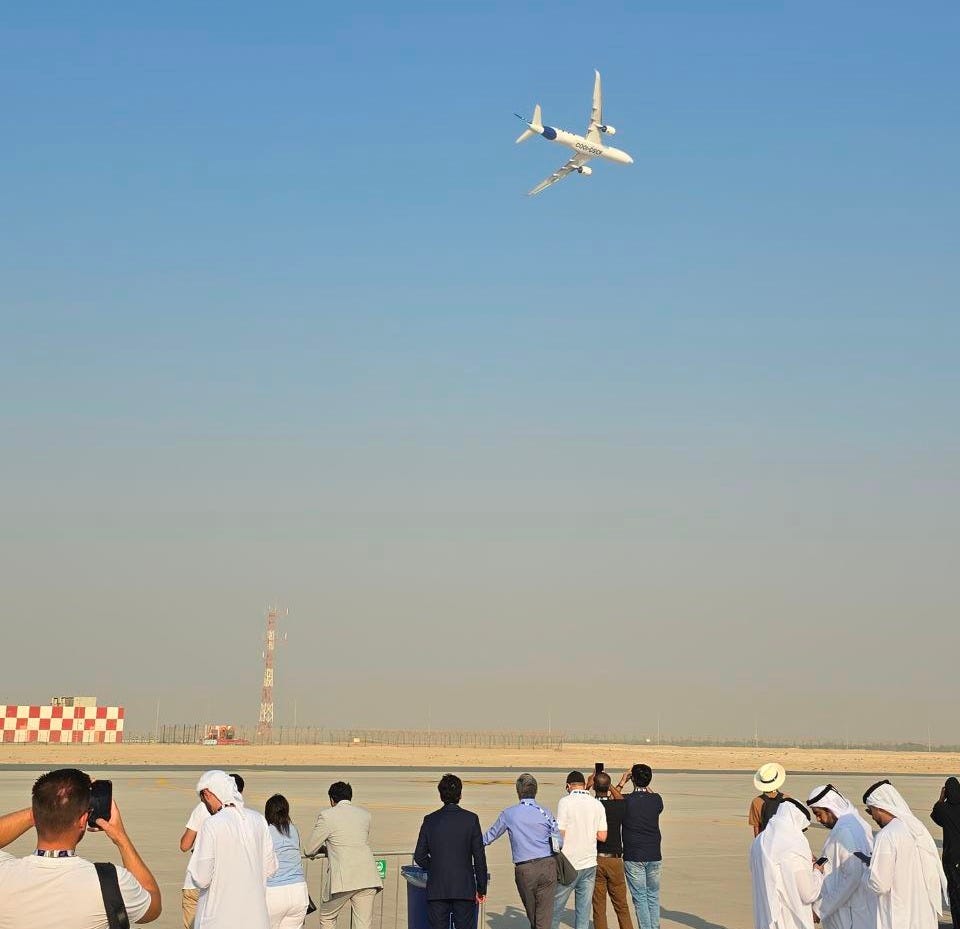
Meanwhile, from November 17 to November 21, 2025, the 19th edition of the Dubai Airshow achieved a historic milestone, with announced deals exceeding $ 202 billion. This record further strengthens Dubai’s role as a global aviation hub and an influential center shaping the future of both aviation and space. As the world’s third-largest airshow, the event recorded unprecedented attendance, welcoming 248,788 visitors.
This year’s edition of the event featured more than 1,500 exhibitors from 115 countries. The event included 21 national pavilions, 98 chalets, an additional 8,000 square meters of exhibition space, as well as 120 startups and 50 investors. The Dubai Airshow continues to serve as a powerful platform for collaboration and the development of forward-looking programs that will define the industry’s long-term trajectory.
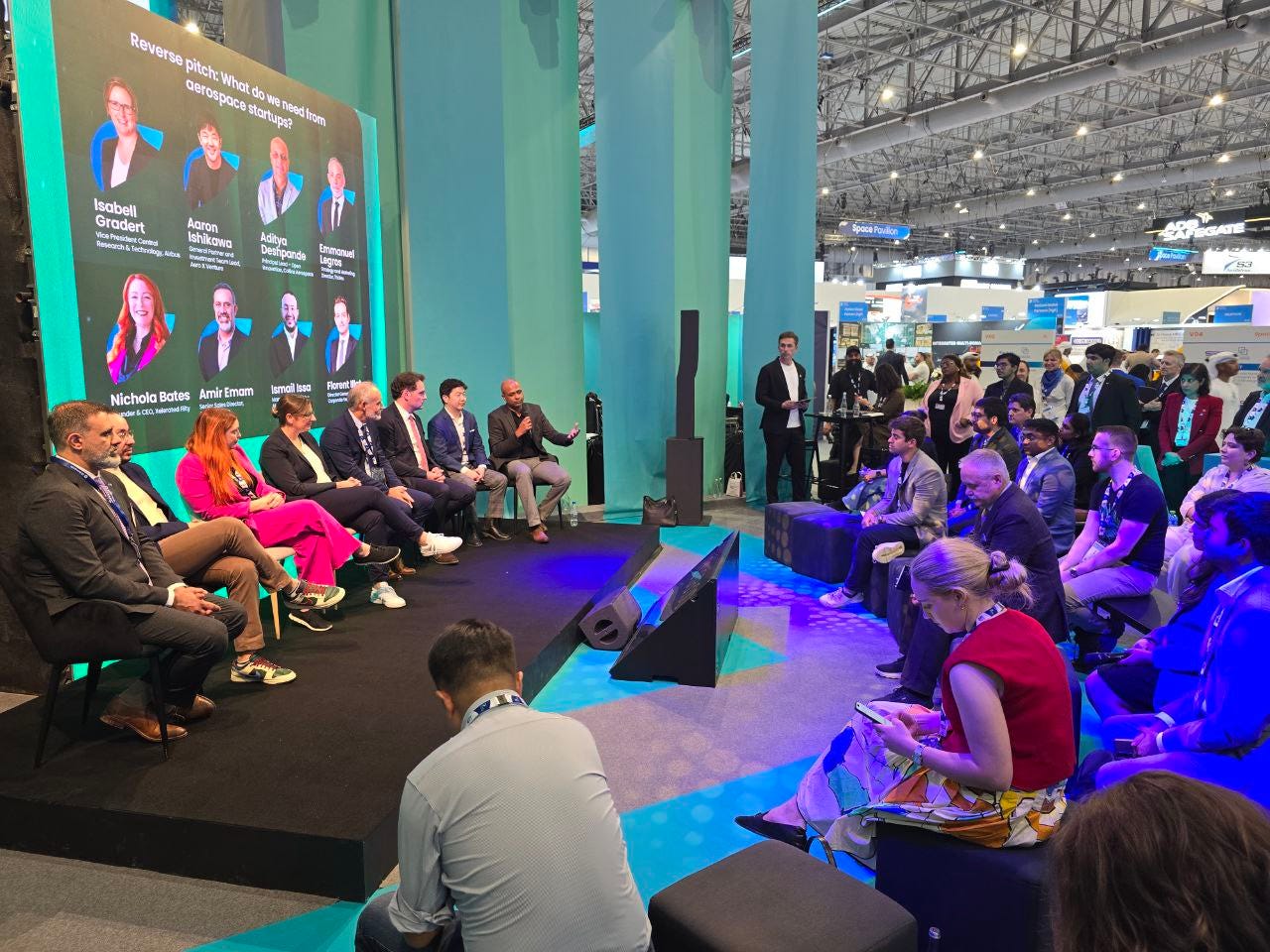
Visitors also had access to the Vista Stage, a dedicated platform for startups, investors, and aerospace industry collaboration. This track offered entrepreneurs unique opportunities to present their solutions, secure investment, and engage directly with established industry leaders.
Here are our insights:
The sources of funding are evolving.
At both exhibitions, it was evident that funding dynamics within the space industry have shifted. Venture capital has become significantly more selective. Fewer investors are prepared to commit tens of millions of dollars at early stages in pursuit of the “next Starlink.” Instead, there is growing emphasis on sustainable, credible, and revenue-backed business models.
Conversely, government-funded programs—particularly in defense, infrastructure, and scientific research—have expanded. Strong momentum is clearly visible in the following areas:
reconnaissance and surveillance (including VLEO);
communications and secure channels;
critical infrastructure monitoring;
earth observation (“Space is about data, and data is a fuel of today’s economy”);
space cybersecurity.
Marat Airapetian:
“Companies that only a few years ago focused on B2C products or broad, unfocused commercial constellations are now actively repositioning themselves toward B2G models. Judging by the scale of government-oriented exhibition stands, substantial capital flows are concentrated in this segment.”
Business models are shifting: from grand visions to operational execution
The exhibitions clearly demonstrated a paradigm shift.
In recent years, many companies emphasized their ‘disruptive’ ambitions—promising revolutionary propulsion systems, platforms, or services. By 2025, this narrative will have largely given way to more pragmatic approaches centered on operational delivery.
The focus has shifted to reliability, service continuity, maintenance, compatibility, and regulatory compliance.
Previously, significant capital inflows, often driven by the popularity of space as a sector, created expectations of rapid growth that were not always supported by signed contracts or operational maturity.
Today, companies are increasingly generating value through execution efficiency rather than visionary rhetoric. Long-term success depends on consistency, predictability, and performance rather than ambition alone.
Geographic priorities are changing
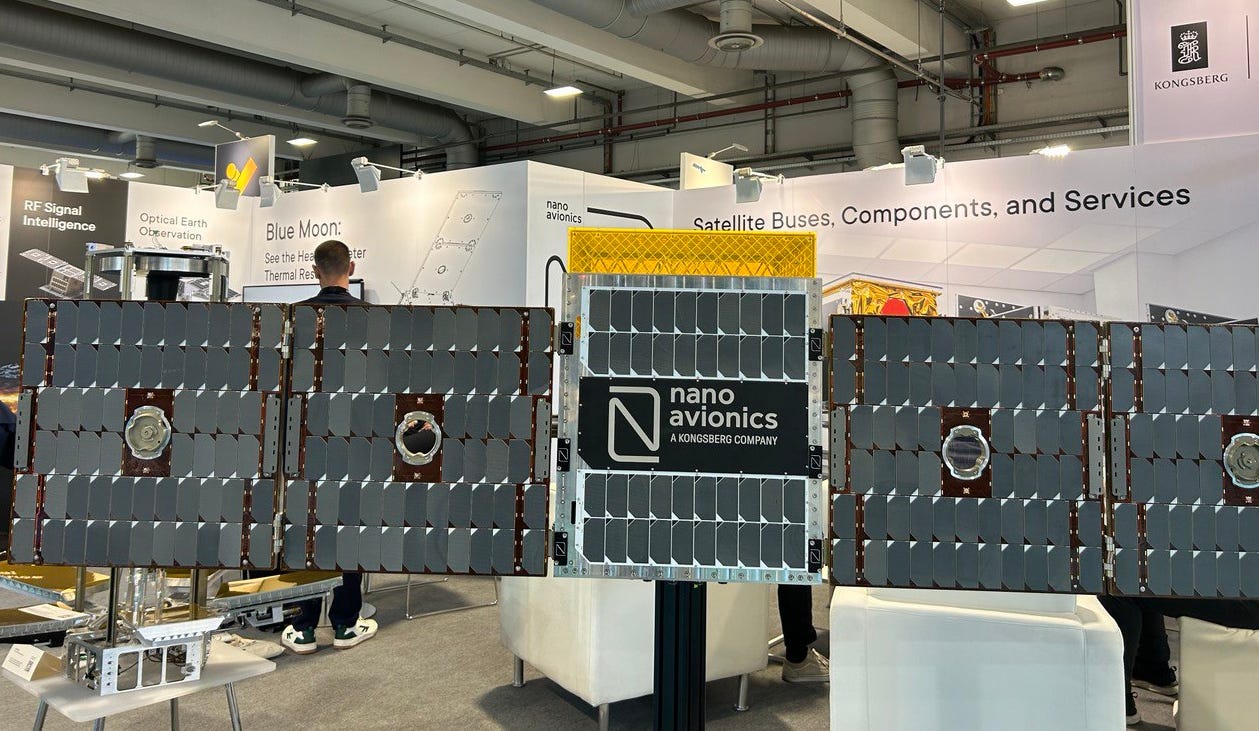
One of the most striking observations at Space Tech Expo was the industry’s geographic diversification beyond the traditional centers of the United States, Europe, and parts of Asia.
Companies from MENA, Africa, Southeast Asia, and Latin America were no longer treated merely as emerging startups, but rather as serious customers and strategic partners.
This trend is driven by two primary factors:
These regions face acute needs in climate monitoring, resource management, and communications infrastructure.
They are often able to operate with greater flexibility and faster decision-making than more bureaucratic markets.
Marat Airapetian:
“Many European companies openly acknowledge that engaging with emerging markets is becoming both easier and more commercially attractive than working exclusively with conservative public-sector customers within Europe. This reflects a broader shift toward a more polycentric space industry—space is no longer reserved for a small group of advanced nations.”
Ivan Khrapach:
At the conference and exhibition, it became clear that the UAE’s space sector is guided by a coherent national vision, with a strong emphasis on inspiring future generations. Through strategic investments, advanced missions, and international partnerships, the UAE is positioning itself as a leader in space innovation.
Despite the current global fragmentation and ongoing conflicts, the Dubai Airshow offered something increasingly rare: a space for dialogue. Even in an environment filled with military manufacturers and defense stakeholders, there was a sense of constructive exchange that has been missing in recent years.
Before attending, I often encountered the view that spacetech growth would be dominated by the US and China, with the rest of the world sidelined. However, the Space Conference conveyed a different narrative. As access to space becomes more democratized, emerging players worldwide can deliver valuable services, such as remote sensing or component manufacturing, with support from local government initiatives. India, which was strongly represented at the Airshow and conference, exemplifies this trajectory.
A key insight explaining why spacetech may accelerate, though not necessarily outperform, in regions beyond the US and China is the sector’s inherent complexity. As many participants noted, spacetech requires deep integration, globalization, and access to top-tier talent. Historically, innovation relied on “technologies that take a village” (i.e., for example, 200 years ago, it was possible to build a water mill with the help of the inhabitants of one village).
Today, we are entering an era of “technologies that take the world.” Neutral regions such as the Gulf offer a unique mix of political stability, security, capital availability, and human resources that enables this level of integration.
Europe is on the verge of a new space legislation: anticipation of the EU Space Act
One recurring topic that came up in almost every behind-the-scenes discussion was the anticipated EU Space Act - the first pan-European framework intended to harmonize space activity regulations across the Union. This anticipation was particularly evident at Space Tech Expo, where companies are awaiting clarity on the regulatory environment that will shape Europe’s space future.
Currently, Europe operates under more than ten national space laws, each with distinct requirements. The proposed regulation aims to establish a unified legal framework covering licensing, safety, cyber resilience, orbital traffic management, and operational standards. In effect, this would transform the EU space market into a single, coherent industry rather than a collection of fragmented jurisdictions. Many industry participants described the EU Space Act as a potentially transformative milestone in the industry's structural development.
About industry and technology
Several technical topics received particular attention in our discussions:
Space debris remains a critical and growing challenge and will obviously become more relevant as the number of spacecraft increases. Regulations (on removing spacecraft from orbit within five years after the end of their service life) are currently quite permissive. However, speakers at both events expressed confidence that stricter enforcement and penalties are inevitable.
Furthermore, at the Expo, multiple companies showcased solutions involving aerodynamic drag sails designed specifically for controlled deorbiting.
Artificial intelligence in space is increasingly viewed not as a trend, but as an operational necessity. The volume of data generated in orbit continues to grow, making onboard data processing essential. As a result, companies are deploying AI directly on satellites to extract actionable insights before transmission. Discussions also covered orbital data centers and AI-enabled analytics. As Dr. Saoud Humaid Salim Al Shoaili, Head of the Omani Space Program, noted, AI and space operations are housed within the same department in Oman due to their strong interdependence.
Small launch vehicles remain a relevant segment despite signs of market saturation. The current phase appears to be one of consolidation, where only a subset of providers will endure. This is particularly important for Europe’s strategic autonomy in launch capabilities. Many companies prefer not to rely on rideshare missions with SpaceX, which often involve compromises on orbital parameters. Instead, they are willing to pay a premium to serve as the primary payload on dedicated launch vehicles, valuing control and precision over cost efficiency.
Meeting with subscribers
Marat enjoyed network opportunities at SpaceTech Expo:
Launch42 — reconnected with Alan Gubiev, co-founder of a company specializing in launch mission management and satellite separation systems for CubeSats and SmallSats.
IENAI SPACE — discussion with Daniel Perez Grande, CEO and co-founder, whose company develops low-thrust propulsion systems and mission simulation software.
Latitude — visited the stand at the invitation of Victor Heaulme; the team is developing a new generation of ultra-light launch vehicles.
Orbital Matter — exchanged views with CEO Jakub Stojek; the company is working on in-space 3D printing technologies.
Ubotica — spoke with CTO Aubrey Dunne about autonomous onboard data analysis and real-time satellite decision-making.
Genergo — conversation with Luca Iaboni regarding an electric propulsion concept that generates thrust without propellant.
AS23.Space — met with co-founder and COO Baptiste Lombard; the team is building infrastructure for in-orbit data processing and storage.
Marat Airapetian:
In conclusion, I would like to say that exhibitions such as Space Tech Expo are not just a showcase for technology, but a rare opportunity to see where the industry is heading, hear live insights from the teams that are making space practical, and experience the dynamics of the market firsthand.
Ivan Khrapach:
For me, the conference was a chance to refresh my thinking, get inspired, and broaden my horizons. I strongly recommend these events to anyone working in the space sector—or simply interested in the future of technology. You leave with fresh ideas, valuable connections, and a clearer understanding of what will shape space in the years ahead.
This article comes at the perfect time. AI in space, it truely makes you reflect.